
Friday’s peace-deal headlines gave airline bulls a few hours of optimism. By Monday morning, it was gone. Oil prices jumped in Asia trading after President Donald Trump rejected an Iranian proposal aimed at ending the Middle East conflict and reopening the Strait of Hormuz.
But the specific price levels in the draft (WTI “around $94” and Brent “$107.34”) and the claim that the move happened specifically “in Asia trading” could not be verified from primary market sources in time for publication, so they have been removed here rather than left standing. The directional point remains: crude moved sharply higher after the weekend reversal, and it lands on a sector that was already absorbing a punishing cost increase.
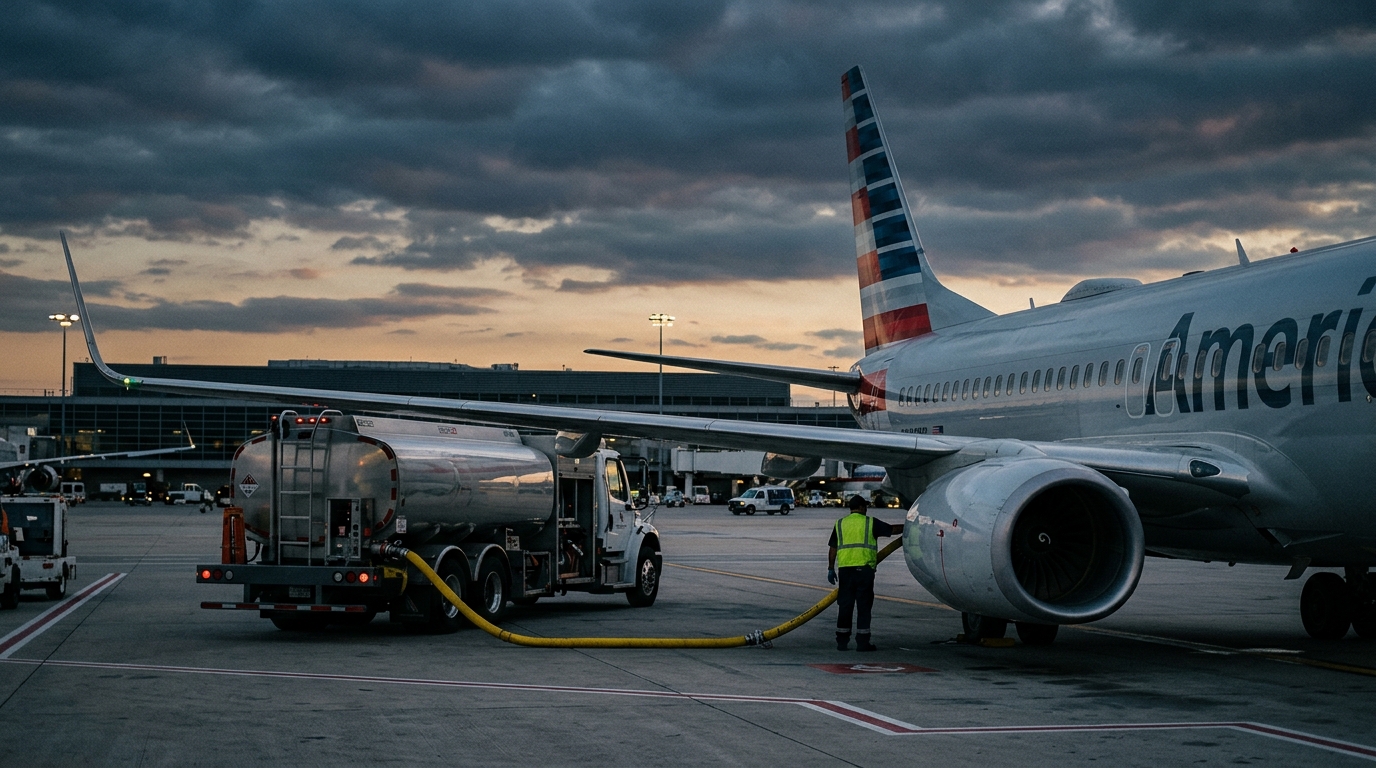
A roughly $1-per-gallon increase in fuel prices over about four weeks implies approximately $1 billion in additional fuel costs over a full quarter for American Airlines, based on remarks from American’s CFO. American management has also warned that elevated fuel is forcing capacity trade-offs, with capacity adjustments already planned for late in the fourth quarter and slower growth anticipated in 2027.
The IATA Jet Fuel Price Monitor’s latest reading shows the global average jet fuel price rose 7.4% week-over-week to $194.90 per barrel. That figure reflects IATA’s latest weekly update, and with Brent still elevated, the setup is not getting easier before Q3 earnings season opens in October.
The trading thesis here is straightforward. Airlines are among the most direct ways to short an oil shock: jet fuel is often roughly one-quarter of airline operating costs (and can run higher). When crude moves up a few dollars in a session, the cost hit is not abstract, it flows directly into forward earnings estimates. And when the Strait is disrupted, the market is forced to price real lost barrels: the IMF has estimated the Strait being effectively closed would cut off about 20 million barrels a day of crude and refined products, roughly a fifth of global consumption. That is not a backdrop that prices a rebound in AAL, UAL, or DAL.
The asymmetry matters, too. The market has already learned to fade peace-headline bounces when they do not translate into sustained tanker transit. The airlines that moved on Friday gave back much of that gain Monday. Traders who bought the relief rally are now under water.
Trump signaled openness to further negotiations even as he rejected Iran’s seven-day plan. That is the primary risk to a short position across the sector. Any credible Hormuz reopening would hit jet fuel prices fast, and the airlines that sold off hardest would snap back the quickest. Before the conflict began, roughly one-fifth of global oil supply flowed through the Strait. Restoring that flow would be a genuine supply catalyst, not a headline trade.
Until there is evidence of actual tanker transit normalization, the weight of evidence stays negative for airlines. American CEO Robert Isom has signaled that sustained high jet fuel prices will likely force the carrier to make capacity trade-offs, with slower growth anticipated in 2027 and adjustments already planned for the fourth quarter. That language, delivered before this latest crude spike, will only sharpen when management faces analysts next month. Watch AAL and UAL for any early Q3 guidance updates. The Hormuz headlines are the lever; the earnings revisions will do the rest of the work.