
Trump’s words shifted sharply on Saturday. Speaking alongside Irish Prime Minister Micheál Martin in Dublin, he predicted a trade deal with Canada would arrive “fairly soon” and sidestepped a question about quitting USMCA entirely. The optimism came after negotiations collapsed in August, making Saturday’s tone a meaningful change in register even without a formal timeline.
The backstory matters. The collapse of broader talks triggered Canada’s retaliatory tariffs, which took effect September 8 on about $20 billion in U.S. goods. Days before that, Trump told Bombardier it could not sell in the United States unless it built there. Wall Street analysts called a full ban legally dubious, noting that such a move would hurt domestic suppliers and buyers at a time when the business jet market remains tight. Now Trump is talking detente. The whipsaw is real, and investors have every reason to focus on what a deal would actually change rather than what one weekend’s comments promise.
Where a Truce Would Move the Needle
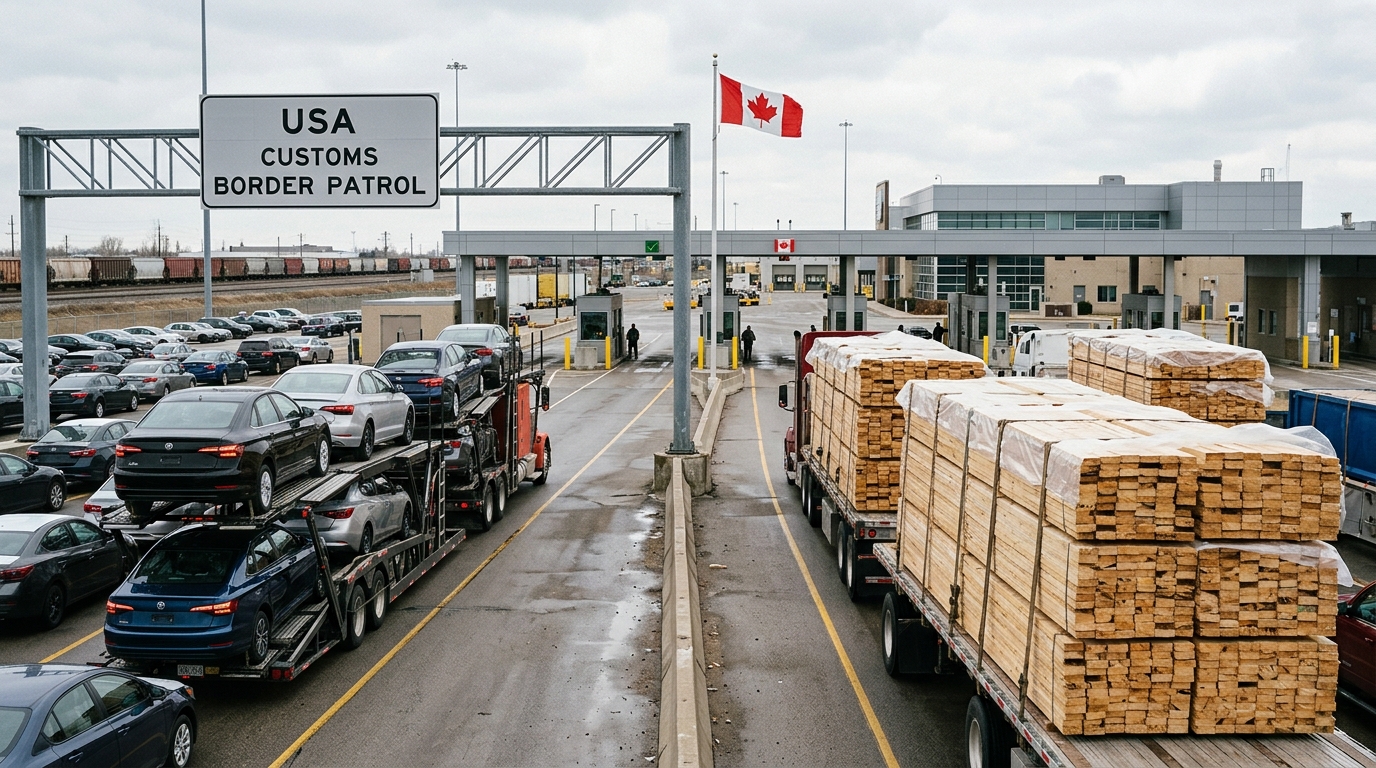
Cars are the most direct exposure. GM raised its full-year 2026 guidance after a strong first half, and it has warned that tariffs remain a meaningful cost and planning constraint. Ford and Stellantis are carrying similar cross-border weight. Auto and parts tariffs on Canadian-origin vehicles are currently slated to rise to 50% on January 1, 2027. Any deal that rolls back that January deadline would give GM, Ford, and Stellantis a meaningful reprieve and likely move their shares the same day the news lands.
Lumber is the next most visible consumer cost. U.S. framing lumber has risen more than 30% from December lows, and a widely cited combined duty stack on Canadian softwood has approached the mid-40% range in 2026 as shipments into the United States fell sharply earlier this year. The United States still relies on imports for a significant share of softwood lumber consumption, so supply restrictions from Canada can drive softwood prices higher. Homebuilders and renovation budgets feel this directly. A trade truce that unwound even part of the lumber duty stack would put downward pressure on construction costs and eventually on new-home prices.
Aluminum is similar but slower to unwind. Canadian aluminum producers face a 50% tariff on sales to the United States, their main export market. Exports fell sharply after tariffs were introduced, and the Bank of Canada has said they were running far below 2024 levels by mid-2025. Reducing those rates matters for everything from beverage cans to auto parts.
What a Deal Would Not Fix Immediately
Canadian National Railway already absorbed the damage from the first wave. Tariffs and economic uncertainty delivered an over $350 million revenue hit to CN in 2025 alone, with forest products and metals taking the largest blows. Rail volumes recover gradually as shippers rebuild contracts and inventory levels normalize. A deal signed this autumn would not fully restore CN’s freight mix overnight.
On agriculture, the tension is structural: Canada’s dairy protections remain central to the dispute, and recent U.S. actions have tied a potential deal to changes that would benefit American farmers. Which barrier a deal actually touches determines whether the relief is worth hundreds of millions or represents a structural shift in Canada’s supply-managed market. Readers holding agricultural commodity positions should not price in a full opening of Canadian dairy to U.S. producers based on one weekend’s comments.
The Wealth-Building Position
Trump’s shift in tone is not a deal. He expressed optimism but provided no details on whether formal talks have resumed. That distinction matters for sizing any position. GM and Ford both carry January 2027 auto tariff risk that a deal could erase, and both stocks have already priced in shifting odds around that outcome. Investors who want exposure to a Canada resolution with less single-stock volatility might look at a position that spans the auto, materials, and rail complex rather than concentrating in one name.
The clearest takeaway: tariff relief on autos would flow to car buyers and Detroit balance sheets within months. Lumber and aluminum relief would reach housing costs within a construction cycle. Agricultural concessions are the last, slowest, and most politically contested piece. A deal that delivers the first two without the third still matters for most readers’ budgets and most North American equity portfolios.