
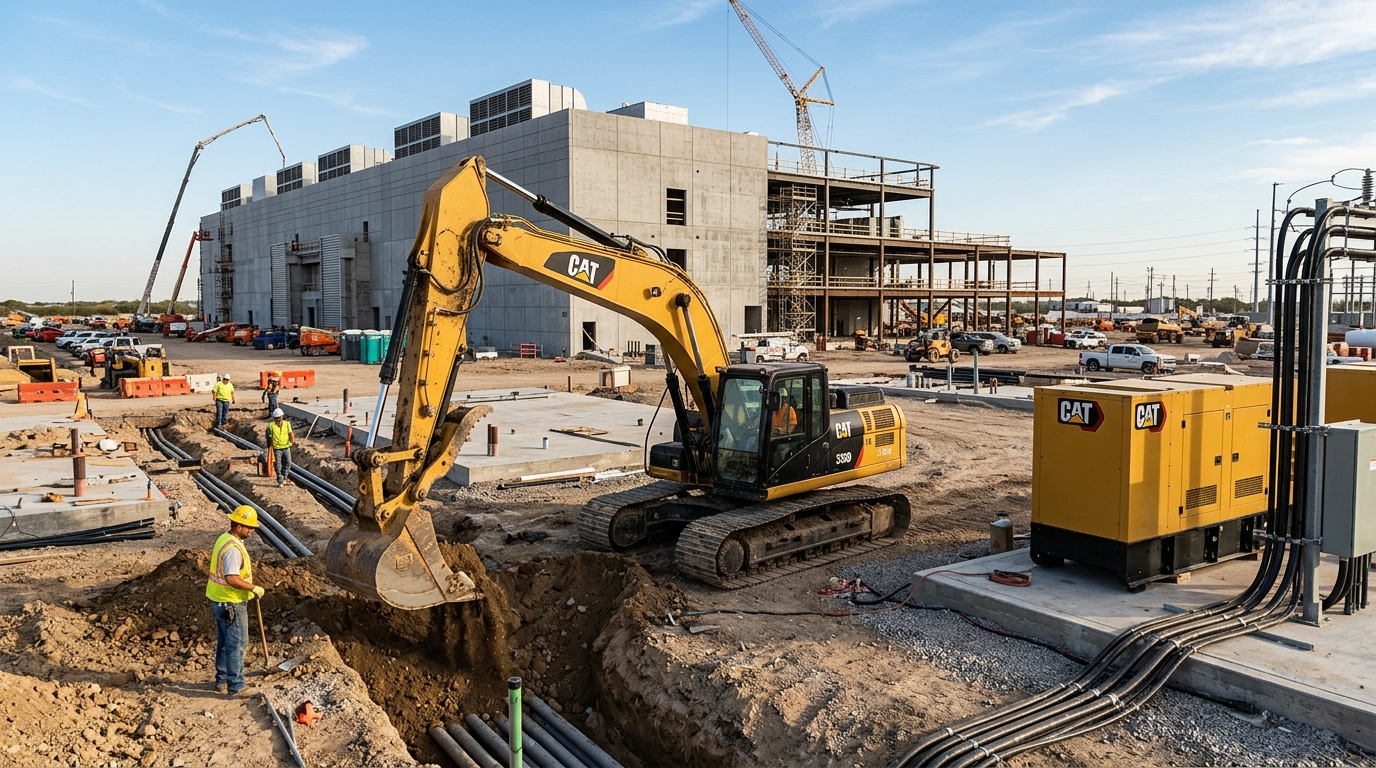
Caterpillar is the kind of company that gets overlooked when AI dominates every conversation. That is a mistake, because AI is a direct reason to own it.
The Business
Caterpillar makes heavy equipment: construction machinery, mining trucks, engines, and power generators. That last category is where the AI connection is most direct. Data centers require enormous quantities of backup and primary power generation, and Caterpillar sells the large generator sets and industrial gas turbines, plus the reciprocating engine systems, that support it. The company competes across construction, mining, and energy simultaneously, a breadth its peers Deere and Komatsu cannot match.
Why Wall Street Is Paying Attention
Q2 2026 revenue reached $20.5 billion, a 24% year-over-year increase and the first time in company history Caterpillar generated more than $20 billion in a single quarter. EPS came in at $8.17 on an adjusted basis, versus about $6.2 consensus at the time. Management raised full-year 2026 expectations to mid-to-high-teens sales and revenue growth.
The backlog tells the more important story. At Q2’s end, Caterpillar’s order backlog stood at about $72.1 billion, up roughly $9 billion from the prior quarter and about 92% higher than a year ago. Management has specifically pointed to very strong demand for large gen sets and turbines used in data center applications as a driver inside Power and Energy. That figure establishes a revenue floor competitors cannot quickly challenge.
Over the 12 months ending late September, CAT returned about 78% against the S&P 500’s roughly 16%. Freedom Broker recently upgraded the stock to Buy with a $980 price target. The 28-analyst Wall Street consensus sits near $976, about 18% above the current price near $827. Q3 earnings are scheduled for October 29.
What’s Driving the Opportunity
Three demand streams are running simultaneously. Infrastructure spending backed by the Infrastructure Investment and Jobs Act is supporting North American construction. Commodity prices and aging mining fleets are driving replacement orders in Resource Industries. And the AI data center buildout is pulling through turbines and generators at an accelerating pace. Caterpillar also raised its quarterly dividend about 8% in June to $1.63, extending a 32-year streak of annual increases, while executing $1.5 billion in share repurchases during Q2.
What Could Go Wrong
Valuation is the honest concern. At roughly the high-20s multiple on forward earnings, CAT carries a meaningful premium over the mid-to-high-teens multiples it commanded before AI infrastructure demand entered the picture. A hyperscaler pullback in data center spending, or a slowdown in infrastructure permitting, could quickly reset that premium. Management has also warned that tariffs remain a real cost headwind for 2026, even after recognizing some expected tariff recoveries earlier this year. Execution against the raised guidance will determine whether October 29 is a catalyst or a reset.
The Bottom Line
A roughly $72 billion backlog provides more forward revenue visibility than this company has had in years. Power and Energy demand tied to data centers looks structural, not purely cyclical. The October 29 report is a clear near-term event, and the estimate cycle has been moving up rather than down. CAT is a direct way to own AI infrastructure spending without paying a software multiple. The premium over historical valuation is real. So is the demand behind it.