
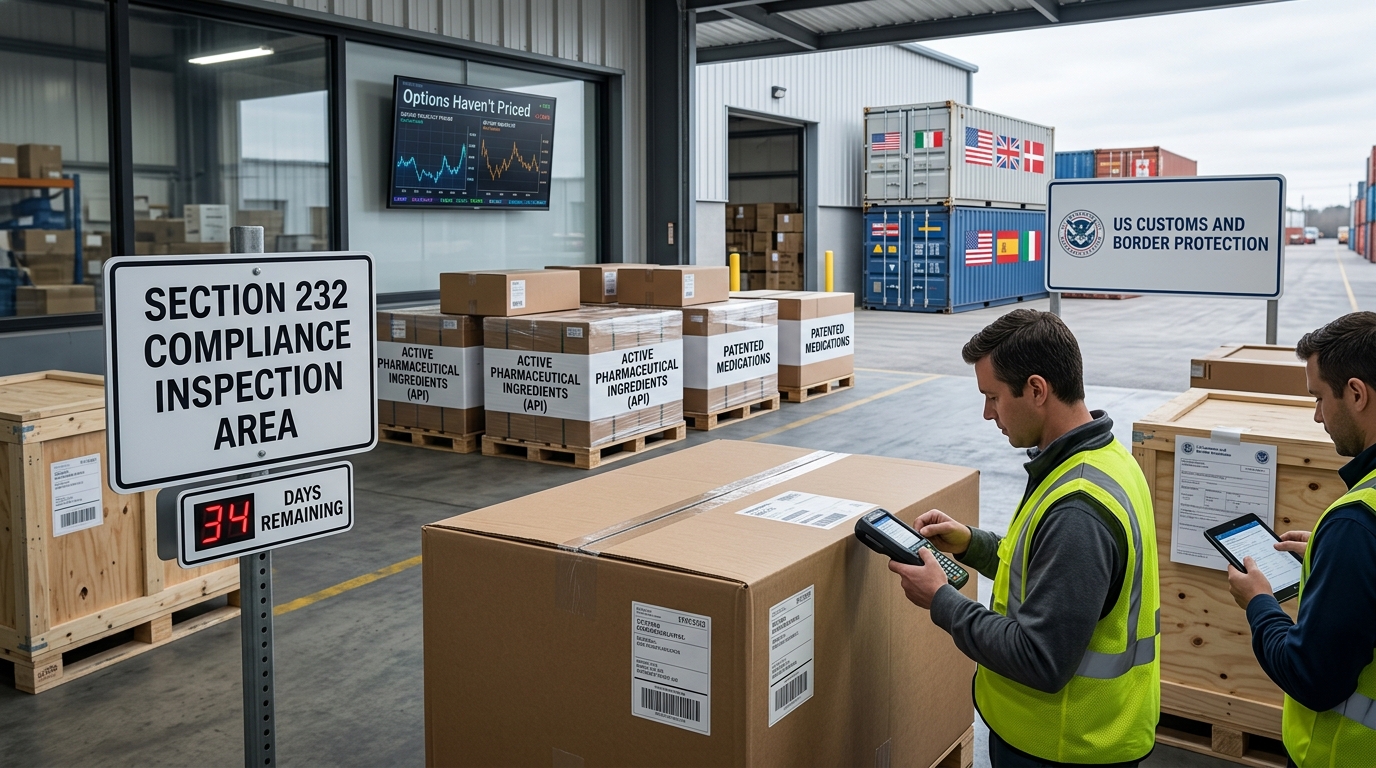
The first wave of Section 232 pharmaceutical tariffs landed July 31 for the 17 largest manufacturers in Annex III. Markets noticed, debated, and moved on. What has not moved is the implied volatility on the second wave’s cleaner targets: the mid-cap biopharma, specialty, and CDMO names that hit September 29 with no onshoring agreement approved, no MFN agreement signed, and import-heavy supply chains pointed squarely at the 100% ad valorem wall.
Thirty-four days. That is the window.
What the Proclamation Actually Says
Issued under Section 232 of the Trade Expansion Act of 1962, the proclamation imposes a 100% ad valorem tariff on the import of patented pharmaceuticals and associated pharmaceutical ingredients, effective July 31, 2026 for the 17 companies listed in Annex III and September 29, 2026 for other companies. Generic pharmaceuticals and their associated ingredients are expressly excluded from Section 232 tariffs at this time. That carve-out matters: the entire risk here concentrates on branded, patented drug portfolios and the APIs that feed them.
The rate structure is a compliance ladder. The standard Section 232 tariff rate for covered patented pharmaceuticals and associated ingredients is 100 percent, but companies with Commerce-approved onshoring plans qualify for a 20 percent rate and, if they also enter into most favored nation pricing agreements with the U.S. Department of Health and Human Services, will pay a 0% Section 232 rate through January 20, 2029. The critical detail: Commerce has published procedures for companies to apply for onshoring agreements, but the government has not published an authoritative, current list stating which companies, if any, have already been approved for the reduced 20% rate. That is not a minor footnote. It means traders should not assume the ladder’s middle rung is populated.
The Drawback Wedge
This is where the trade separates the exposed from the partially hedged. Duty drawback is often limited for some Section 232 programs, but this proclamation explicitly states that drawback shall be available with respect to the duties imposed pursuant to the proclamation.
A 100% tariff is a sticker-shock number, but the proclamation deliberately preserved a meaningful relief valve for importers with an export footprint. For any importer with qualifying exports, drawback can partially offset paid duties. Specifically, drawback law generally caps refunds at 99% of duties, taxes, and fees, subject to the conditions of the applicable drawback regime and claim type.
A mid-cap biopharma with a purely domestic commercial focus has no export book to draw against. That company absorbs the full 100% duty on covered imports. That is the options trade.
The Macro Context Complicates Things Further
Large pharma firms, including Pfizer, Eli Lilly, Amgen, Merck, and Novartis, have publicly announced Most Favored Nation pricing agreements with the Trump administration that were described as tied to tariff treatment. The mega-caps negotiated. The mid-tier did not, and the June 12, 2026 application deadline for onshoring agreements has already passed.
Commerce spent about a year investigating pharmaceuticals, and the debate has centered on how much of the U.S. market depends on overseas manufacturing and imported ingredients. For mid-cap specialty importers without domestic API capacity or an export offset, September 29 is a cost-of-goods event, not a policy headline.
The Options Angle
Implied volatility on the large-cap names, which have largely resolved their tariff status through MFN deals, has normalized. The mid-cap biopharma and specialty universe, where the September 29 deadline is a binary and not a negotiated outcome, has not seen commensurate vol expansion. That gap is the opportunity.
A put debit spread on the highest-import, no-drawback, no-deal names in the specialty biopharma universe captures the downside without naked premium exposure. Target October or November expiry to bracket the September 29 effective date and any guidance revisions that follow. The spread structure keeps the maximum loss defined at premium paid, while positioning for a meaningful gap lower if earnings guidance absorbs a 100% duty hit on APIs with no offsetting export drawback.
The invalidation is simple: a late onshoring approval, an MFN deal, a country or product carve-out, or a Commerce waiver removes the binary. Section 232 operates under separate legal authority from other tariff regimes, and these tariffs remain in effect unless expressly reduced, modified, or terminated. No widely reported court challenge is currently positioned to stay the September 29 date. That makes the deadline more durable than most sector-risk catalysts traders encounter.
The Beast Verdict
The mega-caps negotiated. The mid-tier did not. September 29 is thirty-four days away, the options market has not re-rated the difference, and the relief valve that drawback provides only works for companies with an export book. That combination, a hard deadline, a structural margin shock, no legal stay, and muted implied vol on the names most exposed, is exactly the asymmetric situation defined-risk downside is built for. Size appropriately, buy the spread, and let the calendar do the work.