
Here is what actually happened on July 28.
Core Scientific (NASDAQ: CORZ) reported Q2 2026 revenue of $164.2 million, beating the analyst consensus of $144.83 million by about $19 million. Colocation revenue, the AI data center business, came in at $136.7 million for the quarter, up from $10.6 million in the same period one year ago. That is a 1,190% increase in a single year from the division that now runs the company. Adjusted EBITDA reached $41.1 million, up from $28.5 million in Q2 2025.
At the same time, the company announced a 15-year lease agreement with AMD covering 530 megawatts of AI data center capacity across five U.S. sites, generating more than $14 billion in base contracted revenue with 2.5% annual escalators. AMD also received warrants to purchase up to 30 million CORZ shares at $23.47, giving the chip giant direct equity skin in the game. The option clause matters: AMD secured the right to reserve up to an additional 1,925 megawatts of capacity through December 2028, which could push the partnership to 2.5 gigawatts total.
The stock fell anyway. Shares closed near $20.72 after reporting, down roughly 32% from the 52-week high of $30.46. The GAAP net loss for Q2 was about $1.16 billion, driven primarily by non-cash fair-value changes tied to warrants and contingent instruments. The company has also recorded non-cash impairment charges on mining-related equipment as it shifts away from that legacy business. Strip out the noise and adjusted EBITDA is growing. Revenue doubled year over year. The colocation margin runs at 59%.
What the headline loss is telling you is not that the business is broken. It is that the old business is gone.
The Real Business Now
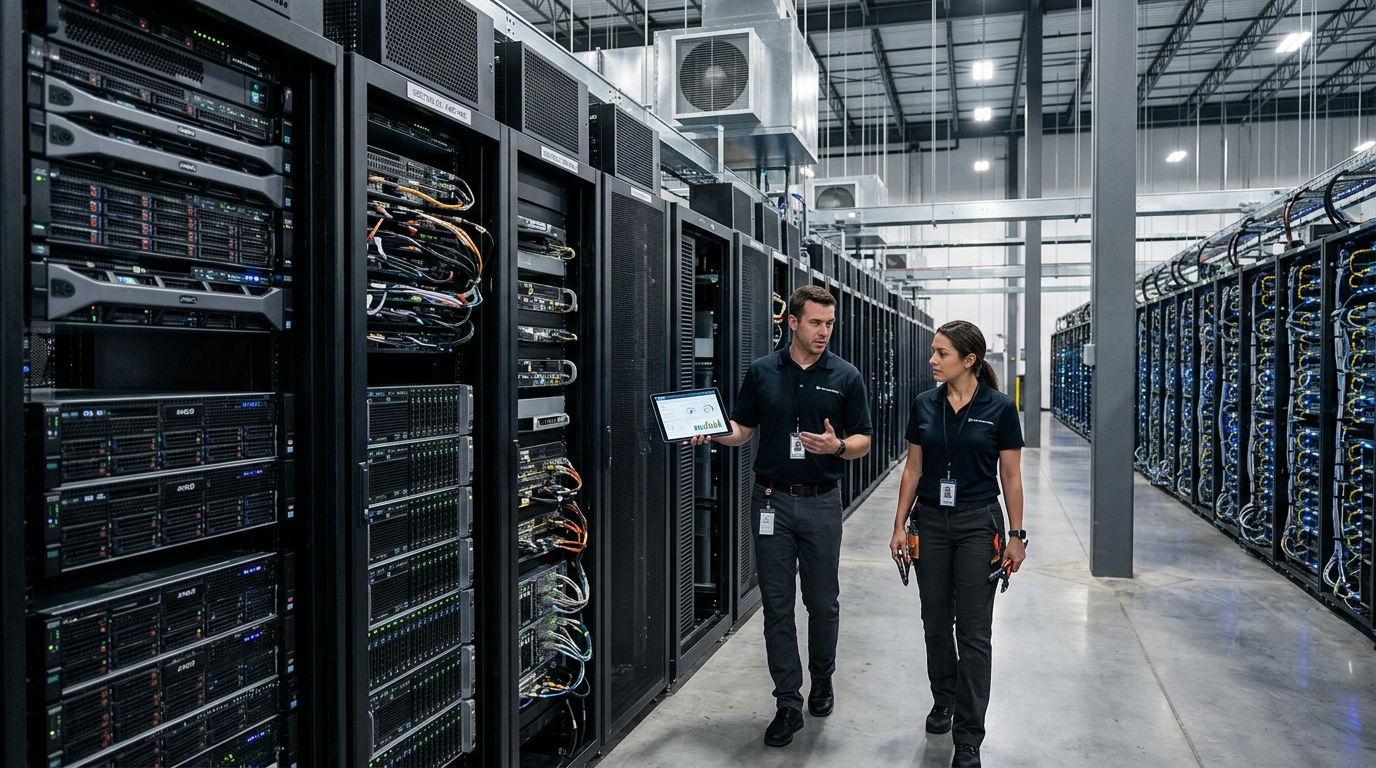
This is not a Bitcoin miner anymore. By mid-July 2026, Core Scientific had 437 megawatts of billable colocation capacity online, up nearly 200 megawatts from the end of Q1. That level of billing corresponds to roughly $635 million in average annualized GAAP colocation revenue based on management’s own figures. Bitcoin mining is down to just two sites. Nearly 30% fewer miners were online by the end of Q2 versus the end of Q1. Hosted mining operations are expected to conclude entirely by year-end 2026.
For the first half of 2026, 77% of total revenue came from colocation. That number will only go higher.
With the AMD deal layered onto the existing CoreWeave contract, total leased customer power capacity has reached 1.1 gigawatts, representing over $24 billion in base contracted revenue according to the company’s own investor presentation. The CoreWeave contract alone covers roughly 590 megawatts with $10 billion-plus in revenue potential and anticipated 80-85% profit margins. Initial AMD delivery is expected in H1 2027, with the full 530 megawatts delivered by end of 2028. Management said they expect to finance the roughly $6 billion AMD build-out through project-level bonds, protecting equity holders from further dilution.
Slight tangent, but it is worth understanding why AMD did this deal here specifically. AMD is locking up the physical layer of AI compute: land with power already connected, substations already tied to the grid, fiber already in the ground. That is not a commodity you can replicate quickly. Morgan Stanley’s July 20 research report quantified the problem: U.S. data centers will need 68 gigawatts of power between 2026 and 2028. Projects under construction account for 15 gigawatts. Available or contracted utility capacity covers another 15 gigawatts. That leaves a potential 38 gigawatt shortfall. Grid interconnection queues already stretch five to seven years in some regions. Bitcoin mining companies control almost 20 gigawatts across large, grid-connected sites. Repurposing those connections can deliver power one to three years faster than waiting for utilities. That is the only reason the AMD deal exists. Core Scientific had the land, the grid connections, and the development track record. AMD needed a home for its chips.
What the Numbers Actually Imply
At the current share price around $20, Core Scientific carries a market cap near $6.7 billion against $24 billion-plus in contracted backlog. That is a significant disconnect, but it requires context. The company is burning cash to build: capital expenditure runs at $11 to $12 million per megawatt for the initial 530 megawatt AMD build, and free cash flow is deeply negative during the construction phase. The company also reports liquidity as a combination of cash, cash equivalents, and digital assets. Meanwhile, the existing CoreWeave business is already generating real revenue while the next wave gets built.
Analysts are split but generally constructive. Freedom Capital upgraded to Strong Buy at $33. Needham raised its target to $35. Canaccord moved to $36. Wolfe Research reaffirmed Buy. The consensus sits around $29 to $30, implying roughly 40 to 50% upside from current levels. The 12-month low sits at $12.60. The 52-week high is $30.46. The stock has a beta of 5.50, meaning it moves hard in both directions. That is not a flaw for traders. It is the instrument.
The single biggest risk is customer concentration. At this stage, one customer accounts for essentially all of the colocation segment revenue, and that customer is CoreWeave. If that relationship develops complications, the revenue profile changes meaningfully before AMD capacity comes online in 2027. The capital structure adds to the picture: Core Scientific issued $3.3 billion in 7.75% Senior Secured Notes due 2031 to fund data center expansion, and total debt sits heavy on the balance sheet. These are real risks, not theoretical ones.
Options Market Context
CORZ carries a beta of 5.50 and implied volatility that has been running elevated through the Q2 earnings cycle. The options market is pricing significant uncertainty around both the construction timeline and the broader mining-to-AI transition. For traders expecting continued execution on the CoreWeave ramp and AMD timeline: defined-risk call structures in the September-to-November timeframe offer asymmetric exposure to the rerating story without unlimited downside. For traders focused on execution risk and debt overhang: defined-risk put spreads targeting the $16-$18 range capture downside if construction delays or financing friction emerge. A neutral theta strategy in the current range, with the stock oscillating between $18 and $25, reflects the real tension between a $24 billion contracted backlog and near-term cash burn.
The implied move on CORZ around major catalysts has been running in the 15-20% range. The AMD warrants vesting schedule and CoreWeave delivery milestones function as embedded binary events inside what looks like a flat chart. They are not flat events.
The Valuation Gap Worth Understanding
Morgan Stanley made an important observation in its July 20 initiation report: Bitcoin mining site operators currently trade at roughly $2 to $4 of enterprise value per watt of capacity. Mature data center providers trade at $20 to $25 per watt. Morgan Stanley’s scenario where miners successfully convert to AI infrastructure sees the sector eventually trading near $15 per watt. Core Scientific, with 1.1 gigawatts of contracted capacity and a 4.5 gigawatt power pipeline under development, sits at the low end of that valuation range today. The AMD deal, which AMD itself described as its single largest infrastructure commitment ever, is a credible signal that the conversion is happening.
The math is not subtle. A megawatt used for AI colocation at CoreWeave or AMD margins generates substantially more revenue than a megawatt used for Bitcoin ASIC hashing at current hashprices. CoinShares estimated that for companies with signed AI contracts, mining revenue will fall from roughly 85% of total revenue in early 2025 to less than 20% by year-end 2026. Core Scientific is ahead of that pace. Bitcoin self-mining is already down to two sites. Management has explicitly stated their strategic objective is to maximize value by converting power capacity into long-term contracted colocation revenue streams.
What is interesting is that the market keeps pricing CORZ as if it is still a Bitcoin miner. The GAAP losses from non-cash fair-value changes tied to warrants and mining equipment impairments look terrible in a screener. But the operating business, the one that will still exist in 2028, is a high-density AI colocation platform with $24 billion in contracted revenue, 59% colocation margins, and a client list that includes CoreWeave, AMD, and Neocloud. It is billing 437 megawatts ahead of schedule.
The question is not whether the business is transforming. It already has. The question is whether the valuation catches up to the contracted cash flows before the construction cycle is complete, or whether near-term debt service and cash burn force dilution that changes the math for equity holders.
What to Watch From Here
- CoreWeave final 150 MW delivery at Dalton Phase II, on track for early 2027. Any delay changes the annualized revenue run rate significantly.
- AMD initial megawatt delivery at Pecos, Texas, the lead site, expected H1 2027. Project-level bond financing needs to close cleanly.
- Over 2 gigawatts of new site opportunities reportedly under due diligence. A third anchor customer announcement would reset the valuation conversation.
- Self-mining wind-down completion by year-end 2026. Once Bitcoin mining is off the books entirely, the GAAP presentation changes and comparisons become cleaner.
- Customer concentration risk: CoreWeave currently represents the dominant share of colocation revenue. Watch for any public signals about CoreWeave’s own financial health and capital commitments.
- Options traders: watch IV behavior ahead of any construction milestone announcements or AMD capacity delivery updates. The stock’s 5.50 beta means move sizing matters as much as direction.
The part most investors are missing is that this is not a story about a miner that might pivot to AI. The pivot is done. The miner is almost gone. What is being priced at $20 is a 1.1 gigawatt AI infrastructure platform with $24 billion in contracted revenue that happens to still have two Bitcoin mining sites running in the background until year-end.
That gap between what the stock says and what the business is has a history of closing fast when the next construction milestone lands.