
Hey there, bargain hunter.
Something shifted in the Meta Platforms story last week, and it happened quietly enough that a lot of people missed the real implication.
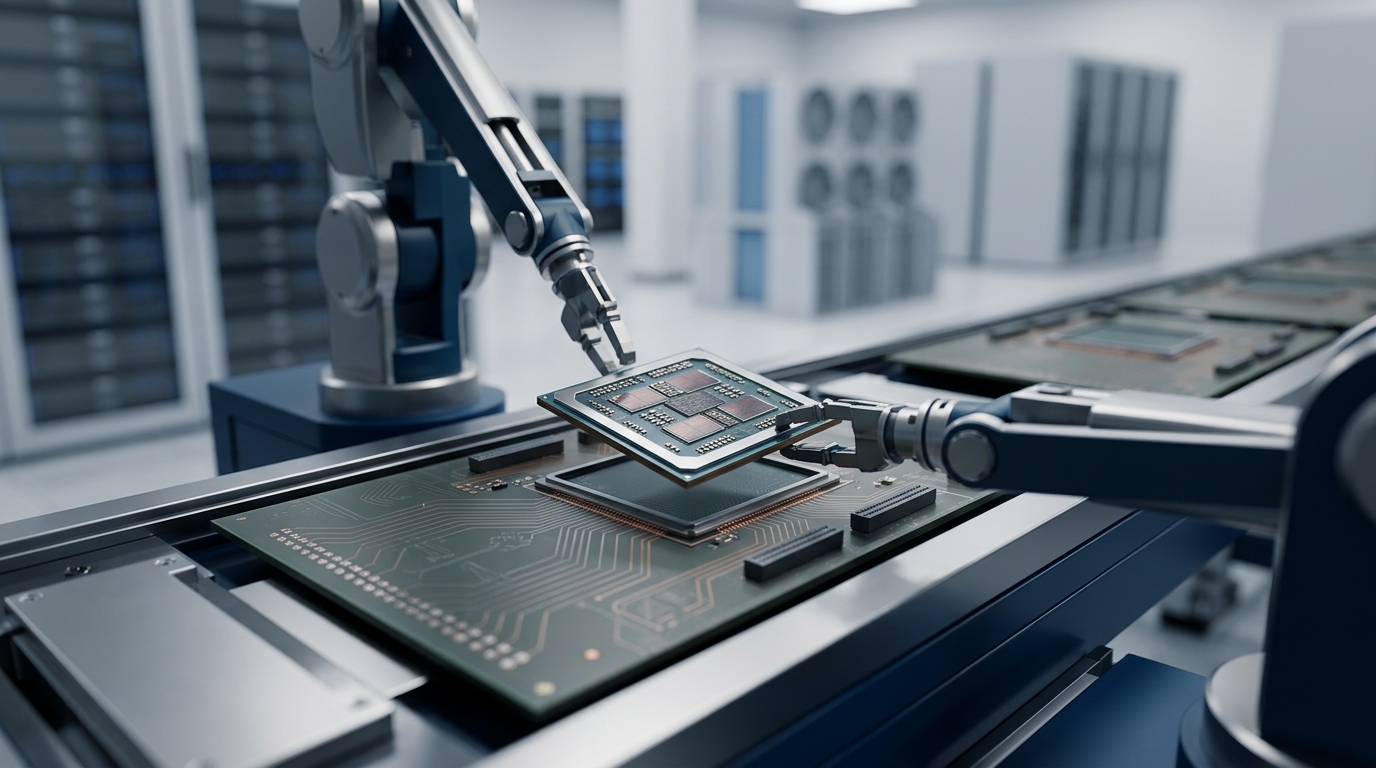
On July 9, Reuters published details from an internal memo: Meta plans to start manufacturing an AI chip from September as part of its plan to boost overall computing power to 14 gigawatts next year. The chip, code-named “Iris,” is part of a four-generation project for Meta Training and Inference Accelerators that it will design in-house.
The stock jumped nearly 6% the same day. Then another 5%-plus the next session. On the daily chart, Meta climbed from around $550 in late June to above $660 by July 10 — a move of roughly 20% in just a few weeks.
That’s the scoreboard. Here’s why it actually matters.
The Spending Problem Gets a Response
Meta raised its 2026 capital expenditure forecast to a range of $125 billion to $145 billion, up from a prior range of $115 billion to $135 billion. That number has been the single biggest overhang on the stock all year. Every time it moves higher, investors get nervous.
The Iris chip is Meta’s answer to that concern. The chips are expected to help the company save on buying GPUs from chipmakers like Nvidia and AMD, although it still expects to spend plenty with those providers as well.
Meta is working with Broadcom to help design the chip and Taiwan Semiconductor Manufacturing to manufacture it. Testing moved fast. Testing the chip took only six weeks and found no major issues — relatively quick progress for an in-house effort that has had a rocky start since its launch more than half a decade ago.
Slight tangent worth noting: Meta reportedly plans to launch a new chip about every six months through 2027 — a much faster cadence than the industry norm of about one new chip per year. That’s not a chip program. That’s a chip assembly line.
The Bigger Idea: Meta Compute
The chip is one piece. The cloud business is the other.
Shares of Meta ripped higher after plans for a new AI cloud infrastructure business — Meta Compute — putting the company head-to-head with AWS, Azure, and Google Cloud. Muse Spark 1.1 is the company’s first pay-to-use model, meaning that it now has an opportunity to directly monetize its AI products.
This is the part of the story that Wall Street is still trying to price. Wall Street is modeling big earnings upside from monetizing AI capacity, but warns this path demands much higher capital spending and possibly a capital raise. That tension won’t resolve until we see actual revenue from these initiatives.
What the Numbers Say Right Now
Q1 2026 EPS came in at $10.44 versus the $6.66 consensus — a 56.79% beat — and revenue hit $56.31 billion, up 33.1% year over year.
- Operating margin: 41%. EPS of $10.44 grew 62% year over year, though a one-time $8.03 billion tax benefit added $3.13 per share to that figure.
- Q2 2026 revenue guidance: $58 billion to $61 billion.
- Consensus Q2 EPS estimate: $7.32.
- At recent prices around $593, Meta trades at roughly 14x forward earnings — well below the S&P 500 average and a steep discount for a business with 41% operating margins.
That valuation number is the part I keep coming back to. For a company growing revenue 33% and running 41% operating margins, 14x forward earnings is an odd place to land.
What Could Go Right. What Could Go Wrong.
Bull case: META is poised to overtake Google in digital ad revenue by 2026, while new monetization avenues like WhatsApp, Threads, and a potential cloud business diversify growth. If Meta Compute generates even a fraction of AWS-level margins, the valuation math changes dramatically.
Bear case: Risks persist from elevated capex, uncertain AI returns, regulatory pressures, and potential sector-wide sentiment shifts. A further guide-up on spending without a matching earnings inflection would likely punish the stock hard.
The answer arrives July 29. META is expected to report earnings on July 29, 2026. Between the Iris chip timeline, the Meta Compute launch, and Q2 revenue against a $58–$61 billion guide, that earnings call might be the most consequential one Meta has had in years.
Whether the stock is genuinely cheap here or just looks cheap depends almost entirely on what Zuckerberg says about where all that capex is actually going.