
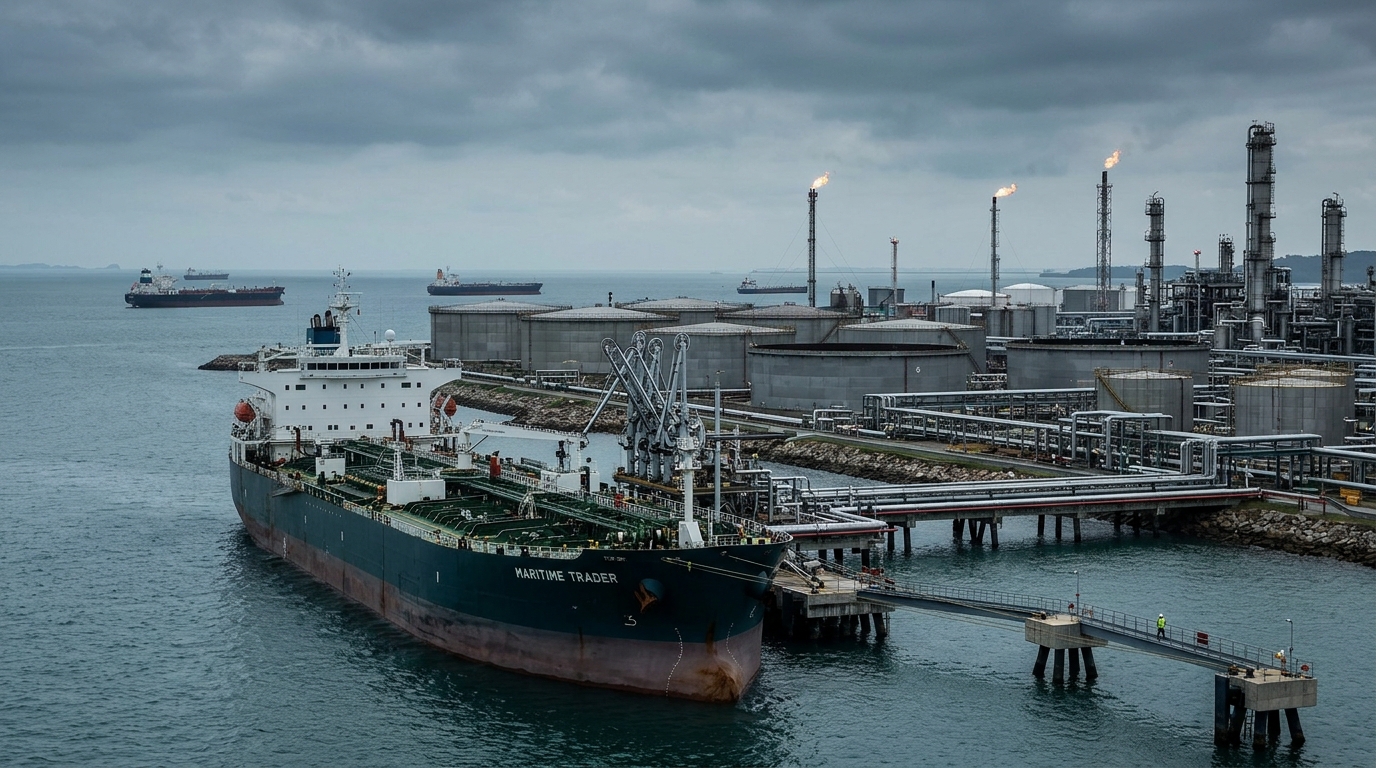
Market Snapshot: Crude
Brent rose to $92.56 on Friday, but the benchmark was on track for a nearly 4% decline for the week, its third straight weekly loss, as expectations of a supply surplus grew because Gulf oil shipments through and around the Strait of Hormuz recovered to roughly 82% of pre-war levels. WTI rose to $83.62 on Friday, though it fared worse on the week. The price action tells a clear story: the war premium that drove Brent to roughly $138 in early April is being eroded, barrel by barrel, as Gulf supply comes back.
The IEA’s November Oil Market Report confirmed that global oil supplies surpassed demand for the first time since the outbreak of the war in Iran, signalling a gradual rebalancing of international oil markets. The report also flagged a return to surplus in 4Q26, with a more substantial build in 2027. That is the number OPEC+ ministers will be staring at when they sit down eight days from now.
Stocks in Focus: XOM, CVX
ExxonMobil and Chevron trade as leveraged proxies on the Brent forward curve. A sub-$92 close heading into the November 29 meeting sharpens the downside case for both, particularly if OPEC+ fails to signal credible production discipline for 2027. Watch for analyst revisions to integrated oil price decks if Brent breaks the $90 handle before the meeting.
Sector Watch: Energy
Energy is the sector most directly in the crosshairs. Capital has been rotating out since Brent peaked near $138 in early April. Much of the downward pressure comes from the recovery in Middle Eastern crude shipments: Gulf oil exports have been recovering and flows tied to Hormuz moved back toward pre-war levels, easing the tightness that defined the spring. The sector’s near-term bid depends almost entirely on what ministers agree to on November 29.
Catalyst Calendar: November 29 OPEC+ Ministerial
OPEC and its allies have completed an independent assessment of how much oil each member can sustainably produce, a review that will help shape production quotas for 2027 and beyond. OPEC Secretary General Haitham Al Ghais chaired the closing meeting by video conference, describing the review as a “historic milestone.”
For the first time, maximum sustainable production capacity levels were determined through a process involving two consulting firms, DeGolyer and MacNaughton and Shri Chandra Energy and Data Processing. This assessment is intended to help establish the 2027 production baselines OPEC+ uses to set future quotas, with ministers meeting on November 29 to decide output policy.
The November 29 meeting will bring together three unresolved issues: a capacity review that defines the baselines, a residual layer of cuts that must eventually be unwound, and a market that could swing from war-driven tightness to surplus depending on how quickly Gulf supply returns. OPEC+ still has a layer of production cuts in place through the end of 2026.
Risk Radar
The geopolitical floor under crude is thinner than it looks. President Trump said he was looking to next year before deciding on renewed strikes against Iran, telling Reuters in an interview: “Well, I’ll talk to you about it after the beginning of the year.” That delay removes a near-term upside catalyst that bulls had been pricing.
Meanwhile, Reuters reported that Ukrainian drone attacks have cut Russian oil refineries’ combined crude processing volumes by about 45% since late October, a supply wildcard that could tighten the market from a different direction if it accelerates.
The Cheat Sheet
- Top Theme: Three consecutive weekly declines in Brent reflect markets pricing a supply surplus faster than the geopolitical risk can change the floor.
- Stock to Watch: CVX and XOM, both are range-bound until November 29 resolves the 2027 quota picture.
- Sector to Watch: Energy. The sector’s direction is hostage to a single meeting date.
- Biggest Risk: OPEC+ surprises with a quota rollover that disappoints, or the reverse: an aggressive unwind of cuts into a market the IEA already expects to be moving back toward surplus in 2027.
- One Thing to Remember: The capacity audit is done. What happens on November 29 is not a question of data anymore, it is a question of political will among the producers who do not all share the same interests.