
When Dow Inc. reported third-quarter results on October 22, investors fixed on the headline: net sales of $11.3 billion, up 13% year-over-year, with increases across all operating segments. The pricing story was equally clean: local price increased 14% versus the year-ago period, led by gains in Packaging and Specialty Plastics, with higher polyethylene prices in all regions. What got less attention was the utilization figure buried in the analyst Q&A.
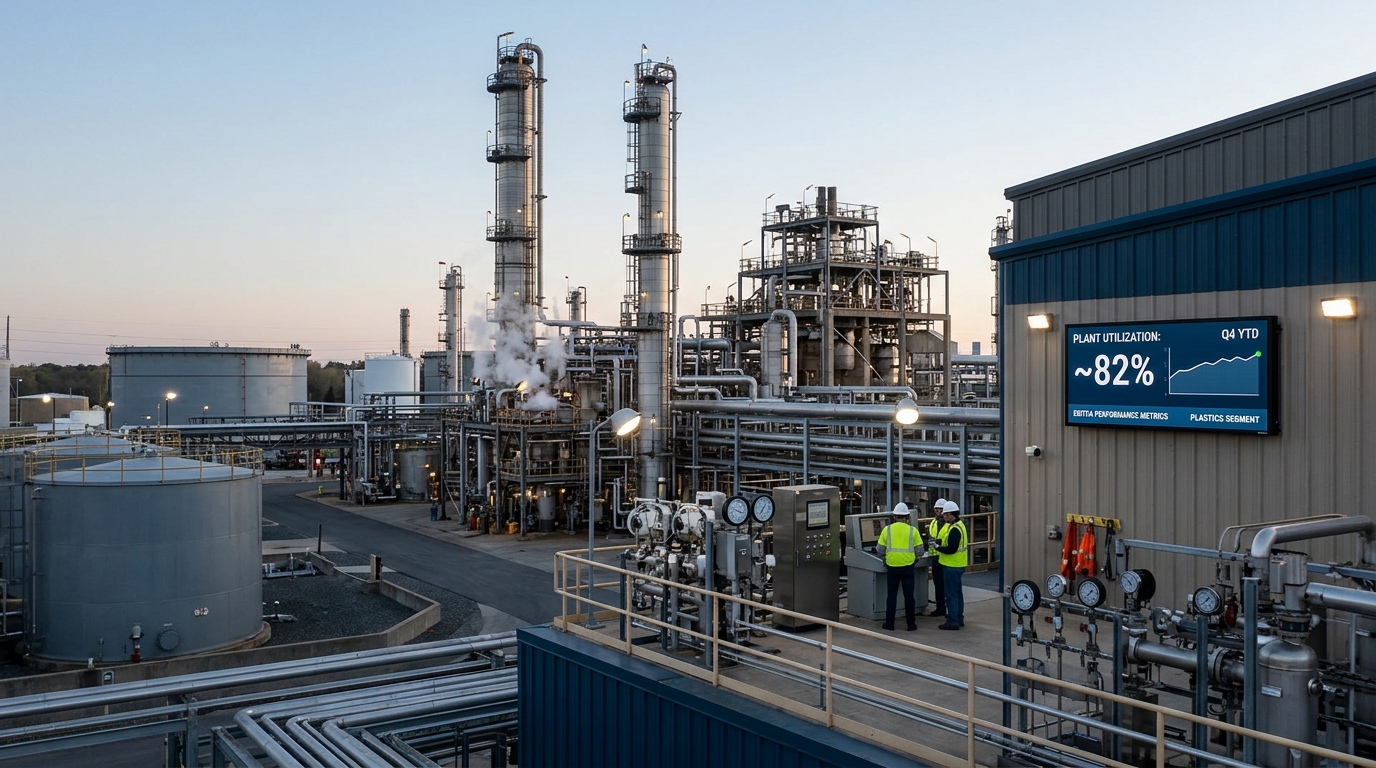
When RBC Capital Markets asked about global utilization rates across polyethylene, polyurethanes, and silicones, management confirmed that ethylene and polyethylene operating rates sit in the low 80s. That number matters more than it looks. An industry running in the low 80s is not tight enough to sustain price hikes without demand support, and it is not loose enough to dismiss. It is the zone where a modest volume recovery tips margins meaningfully in one direction.
That recovery may be forming. The J.P. Morgan Global Manufacturing PMI rose to 52.3 in August from 52.1 in July, a three-month high and the thirteenth consecutive month above the 50.0 expansion threshold. Dow’s own Industrial Intermediates and Infrastructure segment noted increased demand for energy applications and AI infrastructure is supporting improved pricing and margins, a demand channel that barely existed two years ago.
Dow expects Q4 operating EBITDA of approximately $1.5 billion, with polyethylene margin gains, lower turnaround spending, and more than $100 million of additional self-help benefits expected to offset normal seasonal weakness. Management said further October and November polyethylene price increases could provide up to approximately $200 million of upside if achieved. That upside is entirely a utilization bet. If packaging and pipe demand holds through the holiday restocking cycle, the low-80s rate climbs toward the mid-80s and the math works. If it stalls, the $200 million evaporates before year-end.
Dow completed significant planned maintenance in Q3, optimizing production for Q4 and beyond, and is prioritizing debt reduction, having repurchased $300 million of debt in Q3 with plans for an additional $200 million in Q4. Lighter turnaround schedules heading into Q4 mean more optionality on the production side. The company is deploying a repeatable site transformation playbook at its largest sites, focused on maintenance, productivity, energy efficiency, and asset utilization, with recent improvements at one U.S. Gulf Coast site helping a cracker achieve record-high production.
Management reiterated its belief that it can get back to mid-cycle operating rates by the end of the decade, aligning with the timing of its Alberta asset, which is scheduled to be completed in two phases with in-service dates in 2027 and 2029. Mid-cycle is not the Q4 target. The Q4 target is simply holding the low 80s long enough for pending price hikes to clear. In a chemical cycle that has spent two years grinding toward a bottom, that is the most consequential operational variable Dow manages between now and December.