
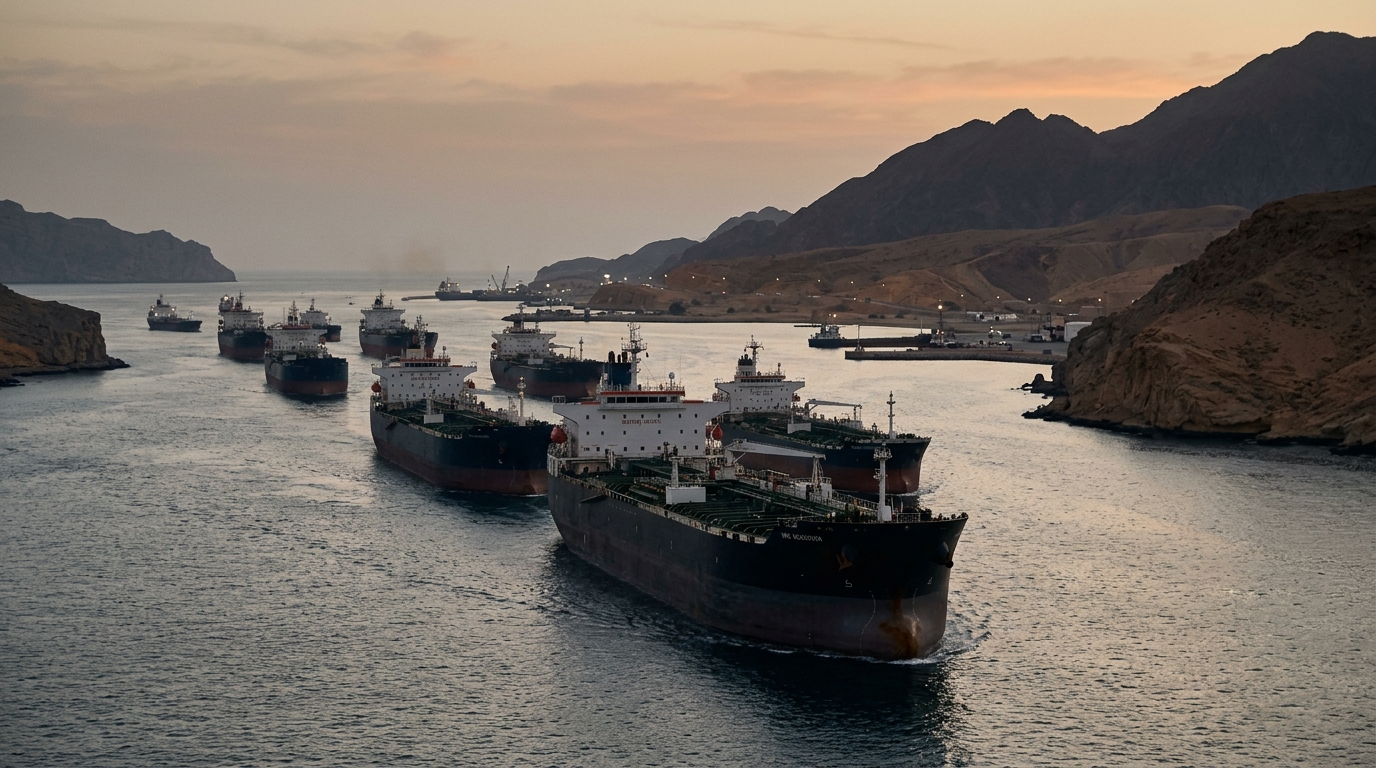
Brent crude sits at $110 a barrel this morning, up more than 80% since January, and the market’s entire posture is built around one assumption: the Strait of Hormuz stays contested. That assumption is now getting the most serious diplomatic challenge it has faced in months.
Iranian Foreign Minister Abbas Araghchi confirmed Sunday that Tehran’s proposal to reopen the Strait of Hormuz within seven days remains on the table, though progress depends on Washington’s response to Iran’s conditions. Those conditions are specific and demanding. Iran wants the US to lift its blockade of Iranian ports, waive sanctions on its oil exports, and release frozen Iranian assets, among other conditions. Washington, for its part, wants Iran’s nuclear programme addressed before anything else moves.
Efforts to revive US-Iran dialogue remain stalled, with both sides at odds over the terms for resuming negotiations. Into that gap steps Pakistan. Pakistan’s army chief Field Marshal Asim Munir is in Tehran today, according to a Pakistani official and Iranian media, as Pakistan has played a key mediating role between the US and Iran this year. Simultaneously, Qatar said it will soon announce a new regional defence partnership and a defence hub to strengthen its military capabilities, a move driven partly by the war’s direct cost to Doha: QatarEnergy has said Iranian attacks in March disrupted about 17% of Qatar’s LNG export capacity, with repairs expected to take three to five years.
These three events together represent a de-escalation architecture that oil, tanker, and refining markets have not begun to price.
What a Working Deal Does to Brent
US Energy Secretary Chris Wright has not publicly put a single, verifiable percentage on the rebound in regional oil flows in recent reporting, but multiple indicators still point to a market trading an uncertainty premium rather than a clean physical shortage. A credible Hormuz reopening agreement, even a phased one, would drain that uncertainty premium fast. Goldman Sachs has put a fully normalized Hormuz scenario at $71 Brent. Markets pricing off the midpoint would imply a $20-plus move lower in relatively short order.
Tanker Stocks Face the Sharpest Reversal
The tanker sector is the most exposed equity trade if talks progress. Publicly available Baltic Exchange materials describe new VLCC time-charter-equivalent route indexes for Gulf of Oman to China, but the specific claim of an Oman-China VLCC TCE at $790,181 per day on Monday could not be verified from primary Baltic Exchange publications. What can be verified is the broader magnitude: market reporting has cited a Poten & Partners assessment that VLCC earnings reached a reported $1.3 million per day in early October, roughly 43 times the around $30,000-per-day level recorded at the start of the year. Any substantive diplomatic progress in Hormuz talks would be a major downside risk to elevated tanker rates; a return to more normal strait traffic could quickly unwind the scarcity premium pushing day rates to record levels. Frontline was about 15% below its recent high as of Monday’s close. International Seaways carries similar exposure. Traders long tanker equities on the geopolitical bid need a clear exit plan if Munir’s Tehran visit produces even a preliminary framework document.
Refiners: The Overlooked Casualty
The refining trade is subtler but equally significant, but the precise figures in the draft on product flows offline and global refinery throughput could not be verified from primary public sources and should not be treated as firm. What is supported is that product tightness has mattered as much as crude. Marathon Petroleum reported that its refining and marketing margin doubled to $36.33 per barrel in Q2. Valero reported similarly elevated results. Both stocks have more than doubled year-to-date. A Hormuz deal that restores product flows compresses those crack spreads, potentially violently. Refiners are cyclical businesses; the market already knows elevated margins don’t last, but it has not assigned meaningful probability to a near-term catalyst that ends them.
Trader’s Action Plan
The base case remains stalemate. Tehran has said it is reviewing Washington’s response to its latest proposal, while signalling that progress hinges on US acceptance of Iran’s conditions. Munir’s visit could break that impasse or confirm it. Watch for any joint statement from Tehran tonight. If Pakistan brokers even a confidence-building agreement, the order of pain is: tanker stocks first, Brent second, refiner crack spreads third. Position sizing in Frontline and International Seaways warrants a tighter stop than the underlying geopolitical vol suggests. For Valero and Marathon, the risk is not binary but directional: a partial deal compresses margins faster than consensus models allow. Oil bulls should monitor whether Brent holds above $108 on any positive headline; a failure to hold that level on de-escalation news is the cleanest tell that the diplomatic move has real weight.