
Hey there, bargain hunter.
DaVita dropped 5.7% in premarket Wednesday and has held those losses through the session. It is one of the worst performers in the market today with no company-specific earnings or guidance. The selling is policy-driven, and it has a specific clock attached to it.
Here is what is happening.
The Trump administration finalized the Medicaid work requirements under the One Big Beautiful Bill in a June 3 interim final rule. The rule takes effect July 31, 2026. States must implement the requirements by January 1, 2027, though some are moving faster. Nebraska went live May 1. Under the rule, certain adult Medicaid applicants aged 19 through 64 must meet an 80-hour-per-month work requirement through employment, education, or community service to maintain coverage.
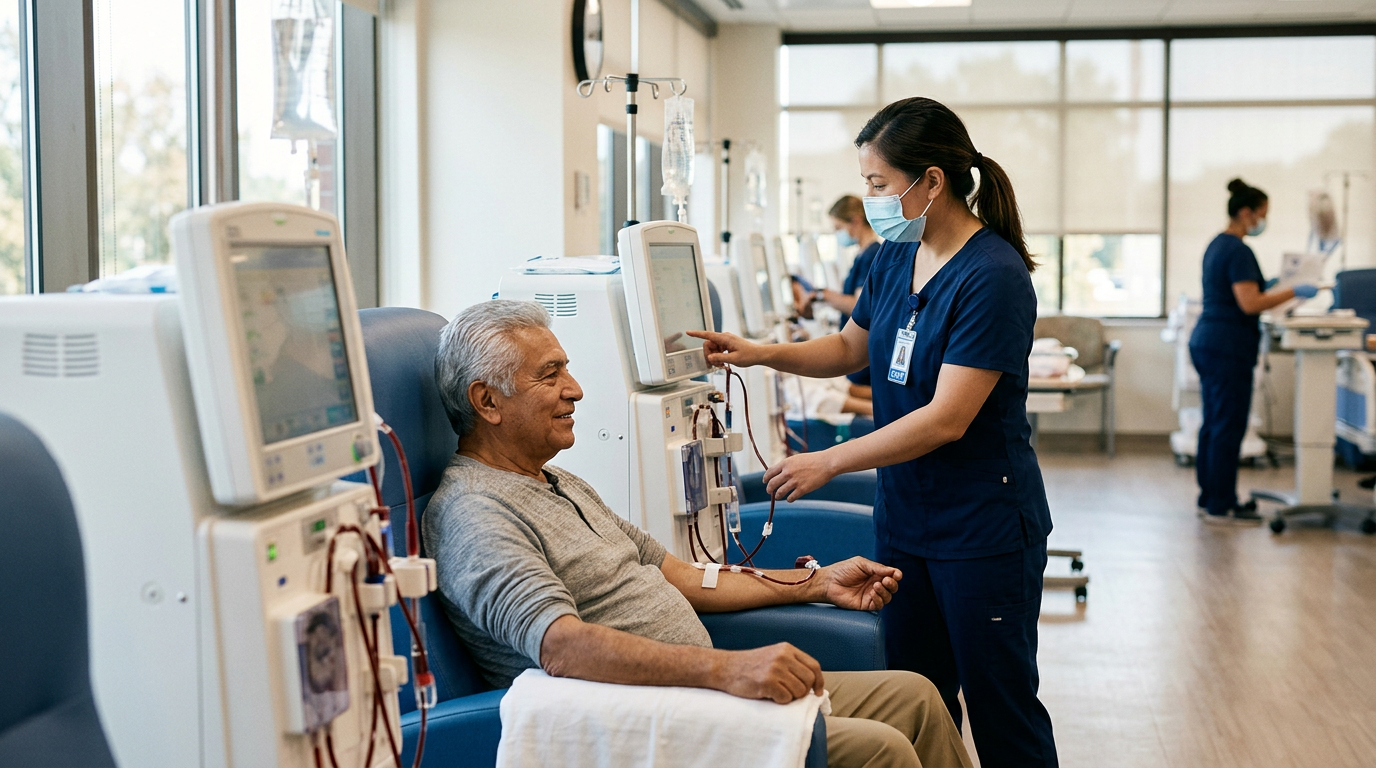
The problem for DaVita is structural. Nearly 50% of all end-stage renal disease patients nationwide rely on Medicaid for coverage of care. Dialysis is not optional treatment. Patients on in-center hemodialysis attend treatment three times per week, roughly 150 hours per year, and face fatigue and cardiovascular complications that limit capacity on treatment days. The 80-hour monthly threshold is, by the National Kidney Foundation’s own assessment, not a realistic standard for this population.
The June 2026 guidance defined medical frailty more narrowly than many states and stakeholders had expected. The rule requires medically frail individuals to demonstrate impaired ability to conduct work activities, in addition to a qualifying condition. Whether a dialysis patient qualifies for automatic exemption will depend on state-by-state implementation, creating a patchwork that introduces real coverage risk for DaVita’s patient base.
The math runs directly through DaVita’s revenue line. When a patient transitions from commercial coverage to Medicare or Medicaid, DaVita sees a step-down in reimbursement rates. Commercial payers reimburse at significantly higher rates than Medicaid. If Medicaid coverage disruptions push patients into uninsured or emergency-care status, DaVita absorbs uncompensated care. If patients lose coverage and delay treatment, the clinical outcomes deteriorate and the volume picture gets complicated.
The business itself is not broken. Q1 2026 showed a 23.7% earnings beat. DaVita has a $2 billion share buyback program running. Free cash flow for 2025 came in above $1 billion. The Integrated Kidney Care segment achieved its first profitable year in 2025. Multiple analysts raised price targets to $200 and above after the Q1 report.
But the Medicaid policy risk is now arriving on a published timeline rather than sitting as a theoretical threat. The comment period closes July 31. States begin implementation January 1. The market is repricing that transition today.
What matters next: watch the CBO’s enrollment projections. The Medicaid work requirements are projected to reduce enrollment by roughly 2.3 million in fiscal 2027 and 3.1 to 3.3 million in fiscal 2028. Not all of those patients are dialysis patients. But the percentage that are, and how DaVita’s payer mix shifts, is the question Q2 earnings on July 30 will need to address directly.