
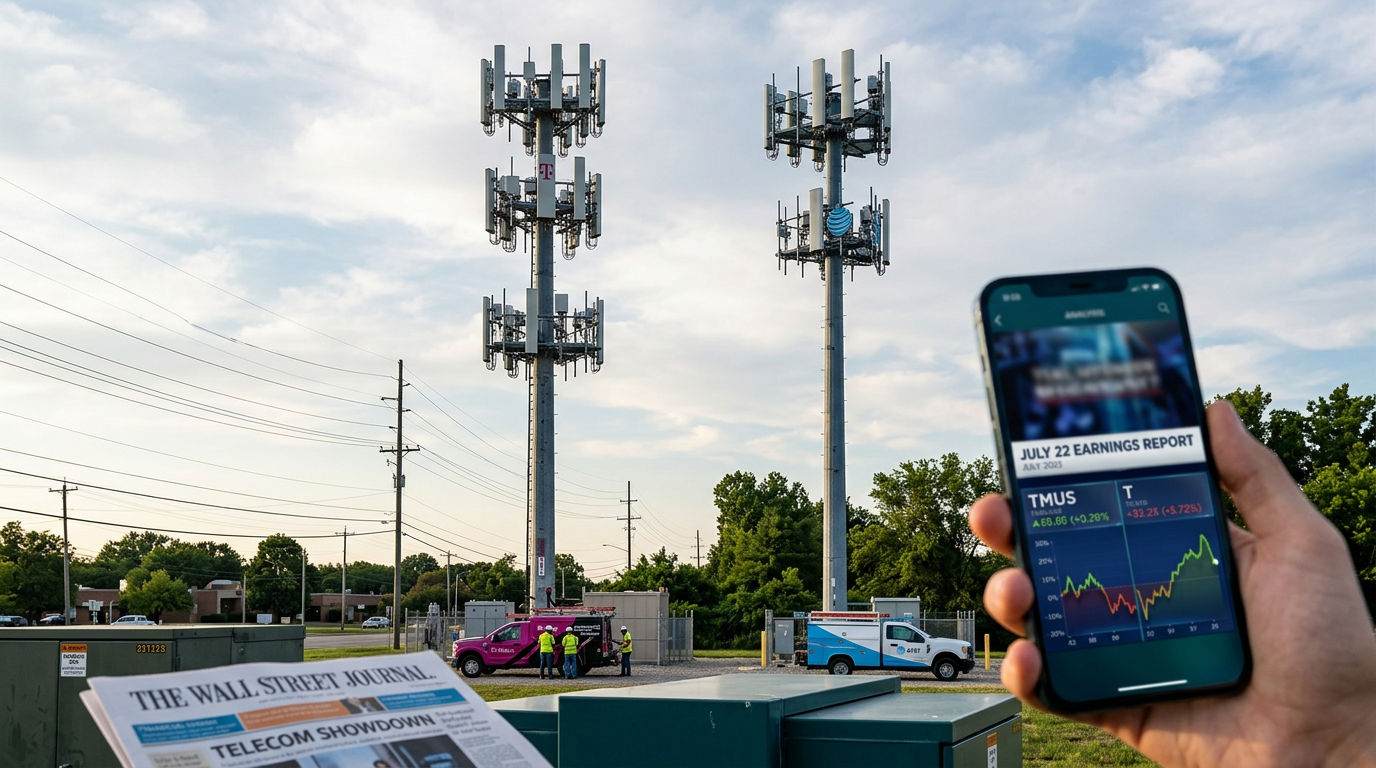
Two weeks from now, both T-Mobile and AT&T will have reported Q2 2026 earnings. The dates are almost identical — July 22 and July 23. The sector is the same. The macro tailwinds are the same. But the stocks are telling completely different stories, and the difference is worth thinking through carefully.
Start with what happened this week.
BofA Securities upgraded T-Mobile to Buy from Neutral on Monday, sending shares up roughly 1.8% in pre-market trading. The rationale was direct: BofA argued that investor concern over competitive pressure has been overdone, and that T-Mobile stands out in the group for its strategic positioning, its relatively limited exposure to satellite broadband disruption, and its flexibility to adjust pricing. That is not a generic upgrade. It is a specific thesis about competitive durability.
AT&T, meanwhile, has quietly become one of the better-performing major telecom stocks of 2026. The company delivered Q1 results that beat both revenue and EPS estimates, added 294,000 postpaid phone subscribers in the quarter, and reported record fiber subscriber growth. Revenue came in at $31.5 billion, up about 3% year over year, and the company’s newly created Advanced Connectivity segment — covering 5G and fiber — grew roughly 5%.
So both stocks are getting attention. But here is where they diverge.
T-Mobile is the 5G growth story. Its network covers all 50 states with both standard and Ultra Capacity 5G, and it has filled rural gaps through a T-Satellite partnership with Starlink. Q1 2026 revenue came in at $23.1 billion, up 11% year over year. EPS beat estimates by nearly 13%. The company’s EBITDA sits at $33.16 billion with a 36.5% margin. From a pure growth standpoint, the numbers are cleaner.
The concern, and it is a real one, is valuation. T-Mobile trades at roughly 19x to 22x earnings depending on which forward estimate you use. For a telecom, that is rich. That is essentially the core of BofA’s earlier cautious stance before the upgrade — not that the business is bad, but that the multiple already reflects the good news. Now BofA has shifted that view, arguing the selloff has created a re-entry window.
AT&T is the opposite trade. Cheaper, slower, and more leveraged. The stock offers a dividend yield around 4.3%. It trades at roughly 10.9x forward earnings. The company is targeting free cash flow above $18 billion for 2026 and aiming for over 40 million fiber passings by year end. The bull case is that AT&T is a capital-intensive business mid-transformation, and the transformation is starting to show up in the data. Fiber bundling is working — 45% of new home internet customers are now choosing wireless bundles alongside their fiber service. That convergence is the real long-term thesis.
The risk with AT&T is also straightforward. Debt is high. Legacy revenues are declining sharply. T-Mobile is a formidable wireless competitor taking share. And free cash flow, while strong in guidance, needs to deliver in practice. Q2 will be the test. Analysts want to see fiber net adds above 270,000 and free cash flow at $4 billion or better to confirm the full-year path.
The part people skip: these two companies are not really the same kind of bet. T-Mobile is a growth story that has corrected. AT&T is a value story in a multi-year rebuild. The right question is not which company has the better network. It is which investment posture you are in right now.
At current levels, T-Mobile at roughly $177 offers a Q2 earnings catalyst on July 23 with real upside if the subscriber commentary is constructive. The BofA upgrade adds institutional credibility to the thesis. AT&T at roughly $25 offers a Q2 report on July 22, a 4.3% dividend while you wait, and a valuation that does not require much to go right.
The editorial call: T-Mobile is the stronger opportunity for growth-oriented investors heading into earnings. The BofA upgrade is specific and data-driven, the Q1 EPS beat was substantial, and the AI-pricing thesis gives the stock a new angle the market has not fully priced. AT&T is the better trade for income-focused investors who want fiber exposure without paying a growth premium. The stocks serve different purposes — but if you can only own one into July 23, T-Mobile has the cleaner catalyst and more room to run on an earnings beat.