
Hey there, bargain hunter. Let me tell you something that doesn’t get said often enough about GE Vernova: the business is not the stock right now. And that difference is exactly where the interesting conversation lives.
GEV has run roughly 70%+ year-to-date as of late June 2026. One year ago, the stock barely registered on most radar screens. Today it’s carrying a market cap in the high-$200 billions, a forward P/E in the high-40s/low-50s range (depending on the source), and an EV/EBITDA ratio that’s been quoted above 100x. Those aren’t cheap-investor numbers. They’re momentum numbers. And momentum, as we all know, has a way of reversing when you least expect it.
Here’s what’s actually happening underneath the hood.
What the Business Is Doing
GE Vernova reported Q1 2026 revenue of about $9.3 billion. Orders surged 71% year-over-year to $18.3 billion. The backlog climbed by $13 billion to $163 billion. Management raised full-year 2026 revenue guidance to a range of $44.5 billion to $45.5 billion, a $500 million increase from prior projections. That’s not a company struggling. That’s a company drowning in demand it can barely keep up with.
The engine is simple. AI data centers need enormous amounts of electricity. GE Vernova makes the gas turbines, transformers, grid solutions, and electrification equipment those facilities run on.
Bernstein initiated with Outperform and a $1,206 price target. On the broader Street, consensus is still broadly positive, with an average price target around $1,212 (with the exact analyst count varying by data provider).
The Pullback Nobody Is Talking About
Here’s the part that doesn’t fit the clean story. After peaking, GEV slid meaningfully off its highs. A forward P/E near 50x still requires earnings growth that’s very hard to sustain at scale. Q2 2026 earnings are due July 22, 2026, and that’s your next real data point.
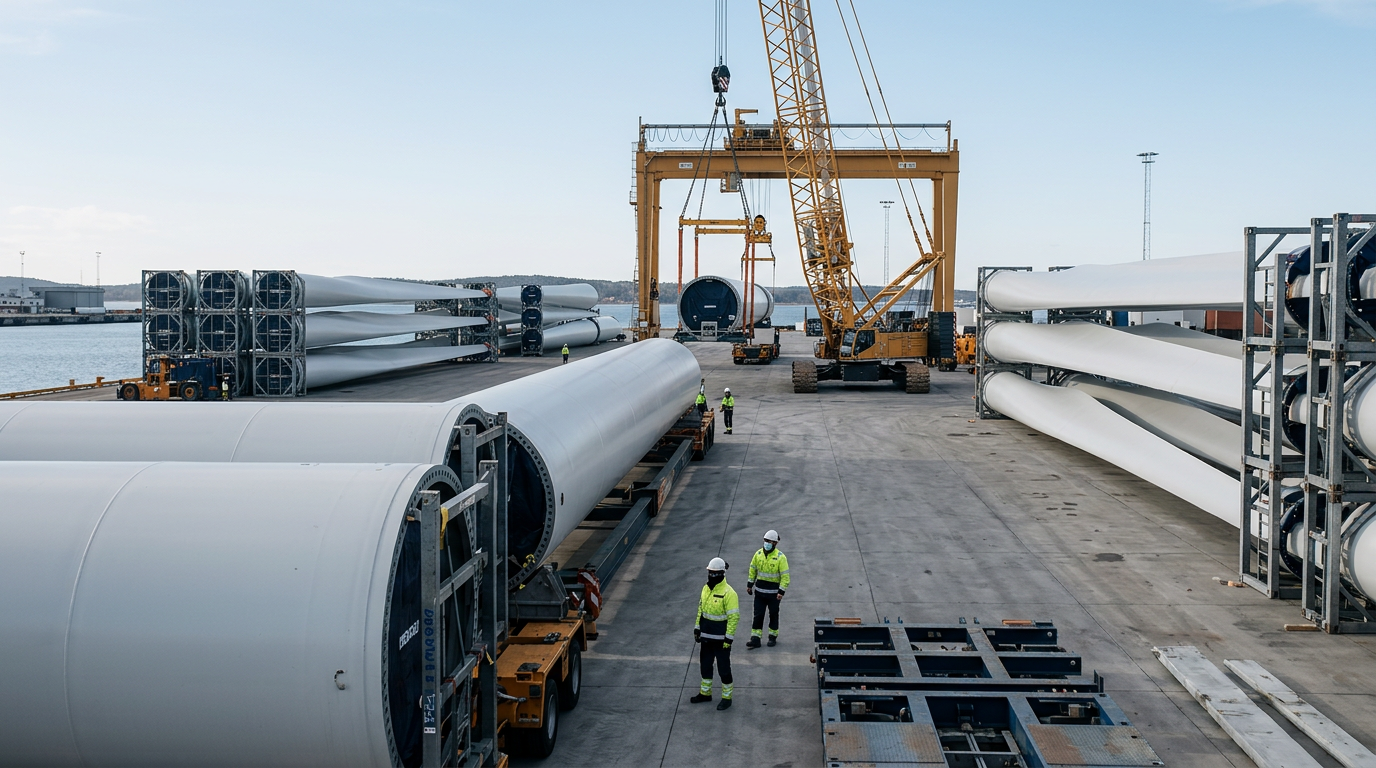
There’s also a Wind problem. Management has guided to roughly $400 million of Wind segment losses for full-year 2026, and GEV is currently fighting a Massachusetts court ruling that’s requiring it to continue work on the 806-megawatt Vineyard Wind 1 offshore project despite wanting out of the contract. Legal overhang, segment losses, and a valuation that demands near-perfection — those are real risks, not footnotes.
- Backlog: $163 billion
- 2026 revenue guidance: $44.5 billion to $45.5 billion
- Orders (Q1 2026): $18.3 billion (+71% YoY)
- Wind 2026 loss guide: ~$(400) million
- Q2 2026 earnings date: July 22, 2026
The Honest Framing
Slight tangent, but it matters: GEV is what happens when a company is genuinely excellent and the market figures it out simultaneously. The underlying thesis is real. AI power demand is not slowing. Grid modernization is a multi-decade build. The business has structural tailwinds that are about as durable as any in the market right now.
But durability doesn’t make a price right. At today’s kind of multiple, you are paying for years of strong execution before the multiple can compress to something rational. Margin for error is thin.
Bull / Base / Bear
Bull: Q2 earnings reinforce that Power and Electrification momentum is holding. Backlog strength continues. Multiple holds and the stock recovers toward analyst consensus near $1,200.
Base: Business performs in line. Backlog converts steadily. Wind losses stabilize but don’t disappear. Stock trades sideways to slightly higher as earnings grow into the valuation over 18 to 24 months. Returns are modest but not painful.
Bear: AI capex slows faster than expected. Wind segment losses deepen. Multiple compresses and the stock tests meaningfully lower levels.
The Action Plan
This is not a buy-the-dip story at current prices if you’re a bargain investor. It’s a watch-the-earnings story. July 22, 2026 is your first real test. If orders remain strong and management reconfirms or raises guidance, the bull thesis survives. That’s when the conversation about adding becomes serious.
For now: watchlist, not portfolio. The business earns its place in the next decade. The stock needs to earn its price first.