
SpaceX priced its IPO at $135 per share on June 11, raised $75 billion in the largest public offering ever recorded, and opened on Nasdaq under the ticker SPCX on June 12 at $150 – an 11% gap above the IPO price. By the close, shares were up 19.2% at $160.95, with an intraday peak near $172. Market cap crossed $2 trillion on day one.
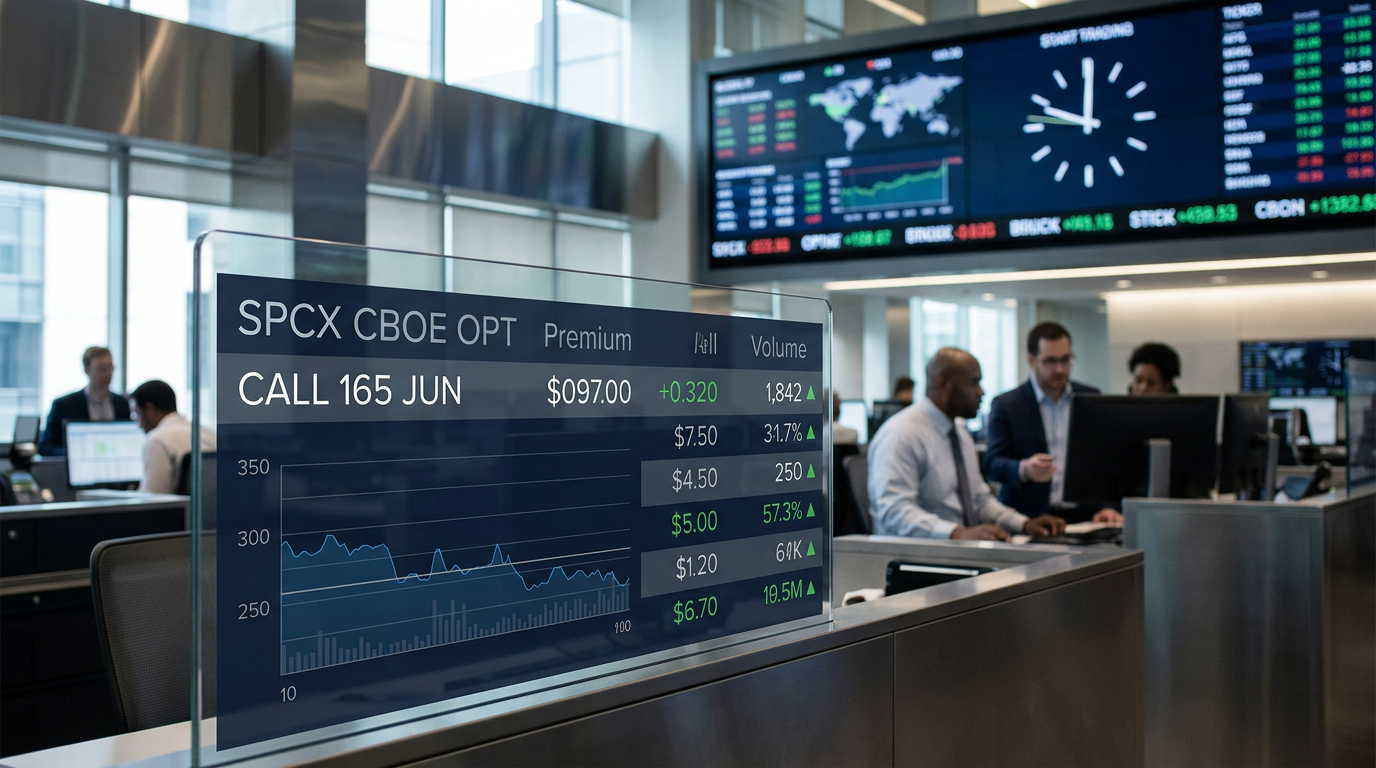
Today – June 16 – options on SPCX begin trading on Cboe and Nasdaq. And this is where it gets interesting, because this is not a normal options launch.
There is no implied volatility anchor. No earnings history as a public entity. No established gamma exposure profile. No Call Wall or Put Wall built from prior order flow. Dealers are building an options book from scratch on a $1.75–$2 trillion company with an estimated 3–5% tradeable float. That structural dynamic doesn’t just create volatility – it amplifies moves in either direction, because dealer hedging in a low-float, high-retail-demand environment doesn’t dampen price action. It accelerates it.
What to Expect in the First Sessions
Historically, freshly listed mega-cap IPOs see implied volatility print north of 100% in the first week of options trading before collapsing – the classic IV crush – into the first earnings report or lockup expiration. Bid-ask spreads are expected to run 5–15% on most strikes until market makers build inventory and hedging models. Limit orders are mandatory. Market orders here are a guaranteed edge-giver to the other side of the trade.
Analysts predict the options market will see considerable activity as investors seek to hedge risks and capitalize on anticipated volatility. Retail enthusiasm for short-dated, out-of-the-money calls is the most likely opening flow pattern – the same lottery-ticket profile that defined the meme-stock era, but layered onto a company with genuine institutional demand behind it.
There’s a secondary catalyst structure worth tracking too. Nasdaq has already adjusted its rules to ease SpaceX’s entry into the Nasdaq 100, while MSCI has indicated it will apply early inclusion rules for large IPOs. S&P 500 inclusion is a later-stage event – possibly 2027 – but the Nasdaq 100 rebalance alone is estimated to force $22–27 billion in mechanical index buying, which creates a two-phase catalyst structure that options traders can position around using calendar spreads and volatility term structure plays.
Defined-Risk Framework for SPCX Options
- Bull case: A defined-risk call spread targeting index-inclusion momentum – bought well away from the current bid to account for wide spreads – offers asymmetric upside if SPCX continues moving toward a Nasdaq 100 add. Size small. Spread cost is inflated by high IV.
- Bear case: Early private equity holders may liquidate. Lockup structures are not yet fully mapped. A put spread positioned below IPO price provides cheap tail protection in a stock with no options history and no institutional price memory below $135.
- Neutral case: Given the extreme IV expected at launch, premium sellers can look at wide iron condors or strangles – but only with defined risk, given the low-float amplification dynamic. An unexpected index announcement could gap the stock 10–15% in a session.
Slight tangent, but it matters – the SpaceX IPO is already pulling capital from adjacent names. Analysts note that institutional rebalancing to make room for SPCX may pressure existing technology, semiconductor, and cloud holdings. That’s a secondary flow worth monitoring for put-buying opportunities in names that face forced selling pressure.
This is the rarest kind of options market event: a completely uncharted volatility surface on a company that everyone has an opinion about. The edge isn’t in predicting direction. It’s in understanding the mechanics before the first order hits the tape.